Ang Misteryo sa Sigbin

Fiction by | March 10, 2025

Magduha na ka semana ang milabay sukad mikuyanap ang hungihong nga aduna’y sigbin sa Purok Gumamela.
Nagsugod ang tanan kadtong mitug-an si Nong Piktoy sa iyang mga kainom og tuba. Nakita niya ang mahikanhong mananap duol sa kamotehan usa ka gabii niana nga mipauli siya sa ilang balay. Matod pa niya, nagtuwad-tuwad kini atubangan sa punoan sa saging ug nasug-an gamay sa iyang espat. Kalit kuno kining midagan palayo.

Samtang miangkon ang tiguwang nga hubog siya ug nahibilin iyang antepara atol niining panghitaboa, sigurado kuno siya nga sigbin iyang nakita niadtong gabhiona.

Lahi sab ang gisaysay ni Berta Bungol. Nadunggan kuno niya ang sigbin nga nagbahis-bahis dapit sa ilahang kamotehan mag-alas diyes na sa gabii. Nahitabo kuno kini kadtong gibati siya og sakit sa tiyan og miadto sa kasilyas sa gawas sa ilang panimalay aron maalibyohan ang iyang kahimtang. Wala na niya nakita ang mananap kay asta kunong ngitngita sa palibot.
Continue reading Ang Misteryo sa Sigbin

Ang Buak nga Botelya sa Dalan

Fiction by | February 24, 2025

Gikan sa likoanan ubos sa linaw sa busay, nagbaklay si Fausto tungas sa Sitio Tungason. Ang mga habalhabal kutob ra sa linaw. Ang tubig sa linaw hinulog gikan sa gamayng busay busa gitawag kinig linaw sa busay ug ang baryo nga nahimutangan sa busay gitawag og Busay. Ang Sitio Tungason maoy kinahilitan nga sitio sa Lungsod sa Busay. Medyo layo ang linaw gikan sa sentro ug walay maayong dalan nga agianan busa dili kaayo daghan ang mangaligo dinhi gawas sa panahon sa ting-init nga mao say tingsera sa klase.

Ang kamisadentro ni Fausto kapug-an na sa singot sa pagbaktas ubos sa nagpamahit nga kainit sa haponong adlaw. Talagsa ra ang kasilongan ning lugara kay ang kanhi lasang gipulihan na man sa kogon ug ubang sagbot nga maoy naglawod sa umaw nga kayutaan. Mao nga sa pag-abot ni Fausto sa nag-inusarang kahoy daplin sa dalan mipahulay siyag kadyot ubos sa landong niini. Ang maong kahoy ilhanan nga tungatunga na siya sa iyang baktason. Nakita niya ang gamayng kinidlat sa kahayag nga gisumbalik sa buak nga botelya didto sa may unahan sa kahoy. Ang tipak nga bildo gikan sa botelya sa soft drink nga gilabay sa nahiagi dinhi. Milihay si Fausto sa nahimutangan sa bildo aron dili matunok. Iya lang kining gilabyan inay puniton ug ihikling aron dili matumban sa nag-agian sa dalan. Wala mabalaka si Fausto nga iya kining matumban kay diha ra man kini sa may daplin ug sinati na niya ang nahimutangan niini. Sama sa likod sa iyang asawa sinati ni Fausto ang tabas, han-ay ug hulma sa dalan paingon sa ilang dapit. Baga na ang kubal sa iyang lapalapa sa pagbaktas ning nagbawod-bawod nga dalan. Dinhing bukira siya nagdako ug naminyo. Gani mabdos man ang iyang asawa sa ikatulo nilang anak.

Wala na mosaka si Fausto sa pag-abot sa balay. Iyang gisab-it ang iyang dala sa haligi sa habog nga payag.

“Naay isdang pirit. Pagtula unya. Modiritso kos tunaan aron mahipos ang kabaw.” Ni Fausto pa ngadto sa iyang asawa.

“Unya nakapalit kag sakos harina?” Pakisayod sa asawa nga nanilhig sa nataran. Himoon og lampin ang sako sa harina. Idugang sa pipila ka karaang lampin nga mao pay gigamit sa unang anak sa magtiayon.

“Tulo ra kabuok kay nagpalit kog batereya para sa plaslayt. Nagpalit sad kog pan. Asa man ang mga bata?”
Continue reading Ang Buak nga Botelya sa Dalan

Kali

Fiction by | January 13, 2025


Kali [Flash Fiction]
I’ve known Kali since sixth grade. Although her real name wasn’t Kali, people called her that because it was short for “Kaliwete,” which means lefty in English. She was known for her left-handedness, and it was a defining trait that everyone noticed.
We bonded over our love for badminton. Every afternoon, after our classes at the local elementary school, we’d rush to the barangay court with our rackets. Kali’s left hand was swift and precise, making her a formidable opponent.
Kali’s family had just moved into a big, old house that everyone in the neighborhood said was haunted. A lush canopy of ancient trees enveloped it, their gnarled branches casting long, dancing shadows that seemed to beckon from the twilight. One day, as young and curious kids, we explored the second floor of her family’s newly bought house.
Inside, the house was a labyrinth of dimly lit corridors and spacious rooms. The worn wooden floorboards creaked underfoot, their rich, warm tones contrasting with the cool, shadowy interiors. The air was thick with the scent of old wood and forgotten memories. The room on the second floor was unlike any other. Its high, beamed ceiling soared upwards. Sunlight filtered through the antique window panes, casting intricate patterns of light and shadow on the polished wooden floor.
In the center of the room stood a giant, ornate mirror. Its frame was carved with intricate flourishes of gilded wood, resembling a delicate filigree of vines and leaves. The mirror was antique, its glass slightly warped and uneven, casting distorted reflections. The ornate frame, intricate carvings, and gilded details added to the room’s air of mystery. I pointed to the mirror in front of us. My voice dropped to a whisper as I leaned closer to Kali.
“Huy, ana baya sa mga movies na haunted ng mga ing ana,” She just laughed, a light, carefree sound that echoed eerily in the dim room. She stepped closer to the mirror, her eyes fixed on her reflection.
“Awa akong nawng,” she said, her face contorting into a playful grimace as the old glass warped her features.
I watched her, feeling a strange unease settle over me. “Wait lang,” I replied, my voice sounding distant even to my ears. “Lipong man”. The room seemed to tilt, and my vision blurred.
When I opened my eyes, the world had changed. The room looked the same, but everything was bathed in a strange, silvery hue. The air felt thick and cold, and a faint hum filled my ears. I turned to Kali, her face pale and eyes wide with fear. “We’re trapped.”
I grabbed her hand, the only solid thing in this surreal nightmare. “We have to get out of here,” I said, my voice firm despite the panic rising in my chest. We started pounding on the glass, our fists hitting the cold surface with a dull thud. After what felt like an eternity, a crack appeared, spider webbing across the glass. With one final punch, the mirror shattered, and we tumbled out, gasping for breath. The room around us was back to normal. Kali and I exchanged looks of both shock and fear. Pale as ghosts, our eyes widened while we pinched ourselves to make sure that we really got out of there.
Today was Saturday. “Unsa man, badminton ta?” she suggested.
We walked to the court and talked about the mirror incident yesterday. “Maynalang nakahawa ta didto, noh?” she said. I ignored the slight smile she gave. “Gani, do you remember how cold it was inside the mirror?”
Kali nodded in reply. “Yes, it felt like the air was being sucked out of the room. And the way our reflections moved… it was like they had a mind of their own.”
We then proceeded to play badminton for the next hour or two. The familiar rhythm of the game usually brought me comfort, but today, something felt off. Kali was using her right hand to hit the shuttlecock. I watched her movements, smooth and precise. When did she get so good at using her right hand?
I brushed the thought away and continued playing, trying to focus on the game. But the more I watched her, the more uneasy I felt. Her right-handed swings were powerful and accurate, almost too perfect.
She won!
She always had a competitive streak, but her victory felt different today, almost possessed. I rushed to the monoblocks and sat on it, my breath coming in short gasps. “O, gihangak na pud ka,” Kali said, her voice light and teasing. With her right hand, she handed me a bottle of water. I took it, my hands trembling slightly. Despite the comforting tone, I decided I couldn’t take it anymore. The questions that had been swirling in my mind demanded answers.
“Kali, kailan ka pa natuto na gamitin ang right hand mo?” My voice trembled a bit, betraying my inner confusion and fear.
“What do you mean?” She looked at me, and the corners of her lips turned to a smirk. “I’ve always been right-handed.”

Victory Valenciano is a 17-year-old HUMSS Learner from Ateneo de Davao Senior High School. She spends countless hours lost in the world of music, arts, and literature.

Illustration by Noy Narciso

My Girl

Fiction by | December 16, 2024

You said goodbye to Attorney Ramos when you clocked out. The solid pine doors of the firm were expensive, heavy under slim hands. But you are healthy. You take good care of your body. You pushed them open easily and walked over to your Jeep, a pretty white thing.

You drove to that gym in Sta. Ana, the one you don’t like. You always complain that it’s too crowded by the time you get off work. Still, you go inside, strip off your blouse, and swap the skirt for a pair of tight leggings. You grew up nicely, didn’t you? Wide hips, full lips, long legs. I could stare at you every day. I do.

Continue reading My Girl

The Meet Cute

Fiction by | November 25, 2024

It was already too early in the morning by the time Henry finally hailed an empty jeepney to lead him straight home.

“South Villa, kuya?” he asked with the kind of urgency only possessed by someone who had 15 missed calls from their mom. The jeepney driver, a tired old man, squinted at him over his eyeglasses and mouthed a confused “Ha?” back at him. Henry repeated himself, much louder this time, and the old man nodded sharply. He rushed to the back of the jeep and sat near the exit as the vehicle started moving again, turning the corner of the demolished mall now barricaded in a blue reminiscent of its logo.

Continue reading The Meet Cute

Kahaw-ang

Fiction by | July 22, 2024

Sa wala pa man misubang ang adlaw, sayo na nga gamata si Damay. Naghinuktok una kini ayha mibangon ug nanghiwid. Migawas kini sa gamayng payag nga may bungbong nga amakan ug mibati sa gasang dala sa kabuntagon. Mihapyod dayon sa iyang panit ang hangin nga may dalang gabon — hinungdan sa pagbugnaw’g samot sa iyang gibati.

“Kwatro ektaryas bya pud to kapin, og di modasmag tong sakop ni Kito unya lagi kamamo gyod ta’g hakot,” dungog kaayo niya ang tingog ni Ulong.

“Dong pangape sa, naay binukal nang termos ay.”

Saguyod nga timbaya sa iya ni Intoy nga iyang uyoan. Mitando lang si Damay ug klaro nga bag-o pa gyong mata kay di kaayo hiningog. Mikuha kini og tasa sa nescafe dayong punit sa aroma nga naa ra sa lamesa samtang galingkod ug gaatubang sa lapad kaayo nga basakan.

Sa katorse anyos nga pangedaron, dili gyod unta para sa basakan ang iyang hulma. Kumpara sa iyang mga kaedad, labing gamay siya nga bata, niwang, apan abtikon.

Human niyang makutaw ang iyang kape, lahos na siyang mipundo sa dakong gamot sa mahogany. Didto niya gitungab-tungab ang maong painit — daw dakong tawo sa iyang mga lihok.

Sa pagpaniid ni Damay sa tibuok basakan, tiunay siyang nakabantay sa pagbuhagay sa kahayag nga mikab-ot ug mikaylap sa iyang gamayng dagway. Naklaro iyahang tabunon nga pamanit ug tul-id nga buhok nga nag ilog ang kaitom ug ang milubad ining kabulaw nga halos motabun na sa iyahang dagway. Gisabalan na siya niini apan sama kaligdong sa magkuno ang iyang gikuptang panaad sa kaugalingon nga di niya kini paputlan — gusto lang niya kining mabati kanunay nga taas.

“Pangandam na didto, May — lakaw na ta taudtaod.”

Midakop kini sa galaroylaroy nga hunahuna sa bata. Giguba ni noy Edot ang kahilom, mihangad siya ug nakita niya ang nagkatigulang na nga dagway sa iyahang amahan. Nahinumdoman hinuon niya ang parehong tingog pila ka tuig na ang milabay.

Kada agi  sa motor nga nanglibod og pandesal matag kaadlawon, mas mag-una pa siya usahay og bangon sa iyang amahan. Gani, siya pay mamukaw. Naanad na si Damay nga kada haguros sa maong motor nga nanglibod og pandesal, mopalit gyod iyang papa maski balig baynte. Kon apiki, kinse o diyes lang. Makigsalo siya sa kape sa iyahang amahan, iyang ituslo ang pandesal niini ug patuhopon ayha kaonon. Kini iyang paborito. Kini ang nagpalipay sa maong bata — kini ang hinungdan nganong matulog siya og sayo, aron makamata siya’g kaadlawn — saksi niini ang ilang gamayng balay, iyang inahan ug iyang gamayng manghod. Inig kahuman, taudtaod siyang maglingkod sa ilahang hagdan. Ambot og unsang matang ni sa routine apan si Damay, diri gyod mag-atang sa adlaw bisan usahay, dili siya siputon ini.

Sukad nabunalan siya atong liwas sa iyang ika-noybe nga birthday kay nasakpang mikuyog sa iyang higalang si Dagul nagsag-ob og tubig sa tabok latay sa tulayng buntong, gisugtan na siya nga molatay sa maong latayan para sa atbang, magsag-ob na sad. Sa hunahuna niya, basin nabunalan lang siya atong panahona kay wala siya gadala og galon, pero sayod man gyod siya sa hinungdan nga tinood.

Golden rule sa ilang pamilya nga dili magpadaplin sa suba kay daghan na laging natagulilong pagkahumang magpadaplin-daplin ini samot nang mga bata nga sama niyag pangedaron. Kanunayng palaman aning istoryaha ang wala milubad nga pagkaana-a kuno sa ukoy sa suba nga mamunlot og bata. Dili lang gyod daw kini panghadlok kay tinood gyod daw kini. Gani, kon si Edot ang pagarayon aning tanan, molakra pa ang kaguol sa iyang dagway. Kini tungod kay isa sa mga batang nawala sa maong suba, iyahang pag-umangkon. Hilom kining gihimong timailhan sa mga ginikanan sa kalubi-an nga kon husto na ang kaisog sa bata para motabok sa pikas pangpang, mitabok na sad ang bata ngadto padulong sa pagkahamtong.

Kambal ang duha ka barangay Lower Usogan. Ang Usogan sa Region X, abunda og tubig apan lunopunon ug gani makita gikan sa balay nilang Damay ang pagkahimo ining dagat kada molukop kini sa mga kahumayan. Ang Usogan sa Region X walay kaugalingong sistema sa tubig ug utro pung lunoponon. Nahimo na hinuon niyang tahas matag buntag ang magsag-ob — latay sa tulay nga nagtakdo sa kahaw-ang taliwala sa duha ka rehiyon tabok sa dakong suba human niya buhata tong pagkuyog niya sa iyang higala.

Nagpahuway siya sa ilang hagdan, gatubod pa ang singot sa iyahang agtang. Nangatagak gikan sa may sentido niya ang mga lugas ini largong hagbong sa panit sa iyang abaga’g lawas nga naghukas, gipatuyok-tuyok ang sanina aron ipaypay sa kaugalingon para hupayon ang kaigang.

“Pangandam na didto, May. Lakaw na ta taudtaod.”

Nadunggan niya ang tingog sa iyang amahan. Mihangad siya ug gisugat siya sa makanunayong suot niini. Ang karaang jacket nga giliburan na sa kaitom nga may mga wiris-wiris sa lapok, lapokon pod nga jogging pants nga di na maklaro ang pagka asul, ug sa ulo — ang kalong ginama sa kugon nga nangatastas na ang ubang mga hibla.

Sa mangga atubangan sa ilang balay, gasandig ug nangdani ang giluti nga mga linghod nga bayog ug pipila ka giluti pud nga palwa sa dahon sa saging. Ginhawang lalom ang mihukom — mitando ug  mibarog si Damay para kuhaon pud sa likod sa ilang balay ang iyang jacket, slacks, ug kalo nga tanan, lapokon usab.

Ika duha na niya nga absent sa unang semana sa ting-ani. Milantaw siya sa lapad kaayo nga basakan ug nanghupaw human makita ang mga lugas nga hingpit nanggikumbayot sa tagsa ka mga uhay.

Alas onse na.  Sakit na ang init. Daw makapaso kini kon walay nagtabon nga panapton sa ilang mga bukton. Si Damay, nagpadayon pa og garab sa mga uhay sa iyang sangab. Di pa maaninaw ang sangkoan sa maong basakan. Kilid sa iyang plat nga iyang giangkon, ang plat usab sa iyahang amahan. Naay usahay mo sideline og laag sa bulangan si noy Edot para mangmasyada ug mabiyaan si Damay ngadto sa tunga sa basakan. Ang payatot nga anak, maghakot sa mga tapok sa iyang sangab dayong tiwas usab sa gibiyaang sangab sa amahan nga kanunay niyang nasabtan ang tanang lakaw.

Naay maluoy sa iyaha ang mga kaubang manganihay ug tabangan siya kay siya may kinaulahiang mahuman. Apan kining adlawa, basakan lang gyod ang tuyo ni noy Edot. Di siya mamulang. Unongan niya ang anak ning tunga sa basakan. Wala siya katuod sa bulangan sa Jimenez ug labawng wala sya kasayod sa maong lugar.

Bisan pa man sa mga adlaw nga taphaw ang pagpabati sa amahan sa gugma ngadto sa anak, idolo gyod gihapon siya niini sukad bata pa kini. Si Noy Edot ang pinakapaspas nga manganihay sa tanang manganihay nga sakop sa ilang kontraktor nga si Abay. Daghang pagdayeg ang mobagat niya kanunay tungod lagi sa kapaspas ini og gani kon naa siguroy lumabaanay og ani, kini ang modaog. Madunggan kini kanunay sa gamayng Damay sauna. Apan samtang nagkadako ang bata, lakip pud niyang madunggan ang mga istoryang iyahang amahan ang pinakausik og agi. Maong ampay timan-an iyahang agi sa mga manghagdaway nga mga mat-an. Sa hunahuna ni Damay, natural lang nga naay mausik kay giani gud kini og kamot ug dili man usa ka makina iyahang amahan. Wala gyod gihapon kini makapahuyang sa iyang taas nga paglantaw sa amahan, kanunay gihapon niya kining garbo.

Distansya na’g kapin sa pulo ka dupa si Noy Edot sa anak. Distansya na kaayo. Kini ang kanunayng gigukod ni Damay sauna, nga mapamubo ang kahaw-ang taliwala nila. Para sama sa iyahang amahan, mailhan usab siya nga isa sa pinakapaspas mangani. Para usab mentras nanggarab, makahinabi niya iyang amahan ug dili ra kaayo tantong mabati ang gibug-aton sa trabaho. Para dili kaayo siya mingawon sa ilang klasrum. Apan sa maong higayon, wala na pugsa’g apas ni Damay ang amahan. Nanggarab lang siya uyon sa kaugalingon ug tinood niyang kapaspason. Didto, maila nga ang sangab, iya sa inosenteng bata. Walay usik, maampingon sa matag garab ug tupong sa matag usa ang tanang uhay.

“Dong, Damay! Silong sa kaw, ako nay tiwas nang sangab nimo,” naundang pagpanggarab si Damay humang naay misampit niya.

“Balik lang diri human ta maniudto kay magsugod na ta’g hakot.”

Mitutok lamang si Damay sa iyahang amahan dayong hangad sa adlaw. Nangatagak ang singot sa iyahang agtang paingon sa iyahang dalunggan samtang iyang mata, halos na ipiyong tungod sa nanaop nga kasilaw. Mibalik siya sa payag kon asa ang maintain sa tag-iya sa basakan naay giandam nga tubig ug pagkaon. Lapokon iyahang tiil tungod kay lapokon man usab ang basakan ug nauga na lang kini sa iyahang tiil ug bagtak kay human niyang makainom og pila ka baso nga tubig, mibalik naman pud siya ug lingkod sa gamot sa dakong kahoy.

Gibag-id ni Damay sa matag usa iyahang mga palad. Nangatagak ang mga naugang lapok. Mabati niyang nagkabaga na ang mga kubal niini samot na ang tuong palad nga kanunayng gahawid og garab. Lalom siyang miginhawa. Nagdulong iyahang amahan sa isla-isla tunga sa basakan kon asa siya ug ubang mga manganihay nagpasilong. Nagbawog-bawog ang imahe ani tungod sa misapaw nga alisngaw gama sa init nga kaudtuhon apan ang samang kainit, kanunayng gisulayan og hupay sa bugnaw nga hangin nga kanunayng mohapak sa ilang natostang mga panit.

“Maniudto na!” Singgit sa maintain sa basakan.

“Oy ali na mo! Maniudto na daw!” Ni Abay sa iyang ginsakpan.

Dali nakigsalo og hinaw si Damay sa balde sa mga kauban niyang hamtong nga manganihay. Hugyaw kaayo kon magtapok ang tanan. Dinuyogan og mga komedya ilang paniudto samtang nagkalingaw’g kusi-kusi sa lawas sa isdang sigarilyo nga gikan naglangoy-langoy sa taga liog nga sabaw. Misaba ang udto. Ang kinataw-anay ug panagtabi mibuak sa hamugaway nga kahilom nga kaniadto sa wala pa sila, mga langgam lay nagkalingaw’g pulpog. Kinataw-anay’g panagtabi nga hingpit gitago ang ilang kinabuhi isip manglangyaway ug ang bulok lang sa ilang panit, ulat sa mga kubalong palad, ug gipangtay-a’g nangalungis nilang kuko ang kanunayng mopalutaw sa ilang mga kaagi.

Naghukas si Edot samtang naglingkod sa bukubuko sa bukong ilalom sa laing dakong kahoy nga mahogany. Nanghingiki kini samtang nagpahungaw sa kainit sa lawas. Walay kalibutan ang amahan nga ang anak, si Damay, nahiluna sa gamot sa kahoy ug napilit ang panan-aw ngadto niya. Wala masayod ang amahan, nga sugod nang gikapoy ang anak sa pagpamubo sa kahaw-ang nga lig-on ang pagkaali taliwala nila. Apan, sayod siya sa mga nausab nga mga lihok ini. Nasayod siya sa kahilom nga pamilyar. Kahilom nga iyaha nang nailhan.

Pagtandog ni Damay sa salopin, wala na kini umoy. Iya kining gilabog ug nabilin ang maong sudlanan nga nag utaw-utaw sa hangin ayha tiunayng mitugpa sa salog nilang kawayan. Nangluod ang bata. Hugot. Hugot ang pangluod ini kay mura ni kinig mayang bungol sa kilid sa sira samtang naglingkod ug nanghingugpos.

“Ay hala, Tamtam! Wala nimo binli imong kuya? Naa man toy duha akong gisalin sa salopin?”Ni Mina sa iyang hinhin nga pangutana sa kwatro anyos nga anak nga kaniadto, nagkaabog pang simod tungod sa lingaw ining pagpugnit-pugnit sa pandesal.

“Nganong padugay-dugay’g mata lagi awa.” Ni Edot ngadto kang Damay nga na estatwa na sa kilid tungod kay sayo kining giduaw sa sapot ug panglood.

“Palit na lang ta’g balik ugma, May. Ali bi, ali bi.”

Pamuyok sa amahan sa iyahang anak nga gilamoy sa kahiubos. Iyang giaswat ang kaniadto sais anyos nga Damay nga nagsugod na’g panglugmaw ang luha. Wala ra hinoon kini milugnot apan ang panghingugpos ini ug ang nagkusmod ining simod, wala mausab. Gibutang niya ang nanglood nga magulang niyang anak sa salog ug milingkod sa habog ug pataas nga lantay sa sulod sa ilang lawak. Gihawiran sa ni Noy Edot ang duha ka bukton sa anak ug ang lubot ini, gisapwang sa iyang duha ka tiil dayong sugod sa lain pang paagi aron maulian kini.

“Tuya nang tuya tuya nang tuya. Aling nang aling aling nang aling.”

Wala gyod kini makapatarog sa bug-at nga kusmod sa anak. Iya nasad kining gialsa ug gipalingkod tapad niya.

“Tikwi banog – asa tugpa didto sa ilok!” Ug iyang gigitik ang bata sa ilok niini, apan, walay nausab.

“Tikwi banog – asa tugpa didto sa liog!” Ug gigitik na pud niya kini sa liog. Hingpit gyod kon manglood ang bata. Lalom. Gabii na gani kini miistorya’g balik sa ilaha ug nakigdula og balik sa igsoon.

Daghang mga ang puli-puli og dagan sa utok ni Damay, samtang naglantaw sa amahan. Daghan siya’g pangutana nga dili niya maingon sa pulong. Gusto niyang magpakabata apan, iyahang palibot, puros hamtong ug sa iyang hunahuna, siya pud. Walay luna para sa sentimental nga pagbati ang maong tapun-og. Puro kinataw-anay sama sa kada-adlaw niyang masaksihan.

Nakita karon ni Damay ang tawo nga rason sa iyahang pagdako. Sa iyahang pagkaana-a ning kalibutan. Sa iyahang pagpaningkamot. Rason nganong naa siya sa kalibutan. Tawo nga kadugayan niyang tutok, nagkahanap. Nagkahanap. Nahimong kon unsang pamilyar nga hayop — nahimong kabaw! Gisakdap-sakdapan kini sa balangkiyod apan milahutay ang kawalay-pagtagad ini ug mipadayog baklay samtang gibagat ug gipamati ang hangin.

Iyahang gilugod iyang mata hinungdan para dili madayon pagpangahagbong ang mga lugas sa tubig gikan ini. Klaro niyang nakita ang tanan. Mibaktas paingon sa basakan ang kabaw ug miagi taliwala nilang duha sa iyahang amahan. Miilog sa atensyon ni Damay ang maong lapokon kaayo’g lawas nga hayop nga giguyod sa maintain paingon sa bag-ong inanihan nga humayan. Iya kining gisundan og lantaw. Didto, nakita niya ang kabaw nga gipasabsab sa mga nanggibarog nga uhay. Ang pangilong ini, hingpit ang pagkataod samtang ang pisi, lig-ong pagkasumpay apan sa maong higayon, gitangtangan og katungod ang pisi nga mohugot kon ugaling manobra ang kabaw sa iyang dulngan. Kini, tungod kay wala ihigot ni ipasok ang laing tumoy ini. Tungod kay gihatagan og kadyot nga kagawasan sa amo ang iyang hayop.

Padayong nagtutok ang bata sa kabaw ug siguro nalingaw sad sa tingog sa sinabsaban niini o basin, nalingaw paglantaw sa kabaw nga mohunong ug mobati usahay sa hangin o mas dakong purohan, nalipay lang sa nakitang hinanaling kagawasan sa hayop. Layo na ang kabaw sa iyang panglantaw. Nagbawog-bawog na ang imahe ini tungod sa padayong pagsaka sa alisngaw sa basang yuta. Nahibalik na si Damay. Buot na niyang tutokan og balik ang amahan apan, didto na niya kini hikaplagi sa tunga basakan nga naay gibaw’k nga dakong butok. Nagdulong. Nagkaduol. Nagkaduol. Duol na gayod, ug naklaro na niya ang mga tiil ining malubong sa lapok taman sa bagtak kada tunob samtang gaaswat sa dakong binutok sa humay nga maayong pagkapatong sa ulo.

Mibalik sa panumdoman ni Damay ang istorya sa iyahang amahan kaganina sa wala pa sila maniudto.

“Dong, Damay! Silong sa kaw, ako nay tiwas nang sangab nimo . . . balik lang diri human ta maniudto kay magsugod na ta’g hakot.”

Dakong katingala ni Damay nga wala siya daniha sa amahan nga mobalik na sa basakan para magsugod na’g hakot. Dako niyang katingala nga wala na siya badlonga sa iyang amahan sa iyang taudtaod na nga pagpahuway nga kaniadto — Nagtanga! Nagtinapulan! Naghinuktok! Mga talinggab nga modunggab sa iyang linghud nga kasingkasing kada madagma siya sa pahulay tungod sa kahuyang sa gamayng lawas. Sa mga inganing higayon, nahisabtan ra gihapon ni Damay ang tanang pait nga pagtagad, tungod kay lisod gyod pud ang trabaho sa tunga sa basakan. Para niya, kon init man ang ulo sa amahan, kini tungod kay init sad ang panahon.

Humang ibutang ni noy Edot ang pinakaunang butok sa iskrin nga nakabukhad, wala na sab niya dalha’g balik si Damay sa basakan ug mibaktas kini pabalik diha-diha dayon.

Nakita karon sa gamayng bata ang kabawng gawasnon ug iyahang amahan sa tunga sa basakan kauban ang lain pang mga manganihay. Nagkahiusa. Nag-usa. Ang kabaw, sila ug sila, ang kabaw — mga kabaw nga tagsag sangab, tagsag garab, tagsag butok. Nakita niya ang dakong bilangguan alang nilang mga manganihay ug sa mga kabaw. Samtang sa ilalom sa landong sa punuang mahogany, nabati ni Damay ang kagawasan ug pagkabata. Nabati sad niya ang gibugnawon sa ilang klasrum.

Gibutang ni Damay sa eskrin ang iyahang gamayng binutok tapad sa butok sa amahan. Nahuman ang tibuok adlaw nilang pakiglimbasog sa basakan.

Milingkod siyag balik sa gamot sa mahogany kon asa sa pikas dalid sa gamot, ang iyang amahan nga naglantaw sa kapunawpunawan. Ug silang duha karon nag-atubang sa nag-alima sa basakan nga nagguyod sa kabaw nga gisakdap-sakdapan gihapon sa balangkiyod padulong sa sabsaban nga ang manag-amo lang ang nasayod.

“Motabok pa ba kaha na sila’g suba, pa no?”

Kalit kaugbok nga pangutana. Tiunay kining nataop sa kasingkasing sa amahan nga nahapna’g hinulat giyahan sa inosente nga tingog sa anak.


Jevin Astillero,  is  from Bonifacio Misamis Occidental and currently a 3rd year BA Filipino student in MSU – Iligan Institute of Technology. He has been a writing fellow of INWW, IYAS, and SUNWW. 

Absent, Ma’am

Fiction by | July 1, 2024

Kining maong sugilanon mananaog sa Ikaduhang Ganti sa 2007 Don Carlos Palanca Memorial Awards for Literature—Cebuano Short Story


DIHANG nasayod kong panawgon na ni Ma’am Fuentes ang mosunod nga mga ngalan, ako na lang giatubang ang akong dagway sa wala pa mahuman nga bungbong sa among classroom.

“Buhay, Daisy…?”

“Absent, Ma’am.”

“Buhay, Rose…?”

“Absent, Ma’am.”

Niining bahina, milapos na gyod ang akong panan-aw sa wala pa mabungbongi nga bahin sa classroom. Ang pagpangataktak ra sa bukbok sa kawayang bahin sa bungbong ang mopahinumdom nakong di gyod ko kalikay sa mosunod nga pangutana.

“Again, it has been two days. Do you know where they are?”

“Sick, Ma’am.” Sus, ako ra gyoy makalitok niining tubaga. Naanad na intawon kog balik-balik niini, sama sab sa pagsulat og “I’m sorry for being absent today because I am sick.” Bitaw, akoy tigtabang nilang Rose nga mosulat sa ilang excuse letters, apan wala na mi kasulat alang sa uban pa nilang mga pag-absent kay nahutdan na mig mga katarongan. Matingala na hinuon si Ma’m nganong sigeg “because I am sick” silang Rose.

Apan mao lagi, “Sick, Ma’am” ra gyod ang akong matubag aron makalikay sab ko nga mag-iningles! Puyde man pod gyod nakong matubag si Ma’m sa tinuod nga hinungdan sa pag-absent nilang Rose apan “speak English” man pod lagi. Mouk-ok gyod ang akong dila niining pinulongana, panington kog bugnaw nga mora bag usa ka dakong mata ang kalibotan nga nagtan-aw nako kon mag-iningles ko.

“Sick again? Rose has already had seven absences and Daisy, six. And the reason is always sick. Lani, aren’t they your neighbors? What’s happening to them?”

Pastilan! Ambot nganong “speak English” man gyod ni si Ma’m nga Math teacher man unta!

“Ma’am, they buys… bought (past tense man diay ni), buys (ay, singular man diay ni), buy shoes today in the town.” Hayyy, Ma’am, stop asking na, uy.

Mayna lang kay wala na mangutana pag-usab si Ma’m. Kasabot gyod nganong absent silang Rose kay wala ra ba niya pasudla sa klase si Rose kay nagtsinelas ra. School policy daw. Ambot ba ning eskuylahana, public man unta, naa pa gyod dinhi sa kabukiran, apan nganong estrikto man gyod sa mga yuniporm, ID, sapatos, ug uban pa. Nagpuli-puli na man gani silang Rose ug Daisy sa sapatos sa ulahi pero puli-puli pod lagi og absent.

Sa pagkatinuod lang, miabsent baya ko kas-a kay gipahulam nako si Rose og sapatos, total, wala pa man koy absent-absent. Amiga gyod nako si Rose kay kaedad-edad ra nako, kinse anyos. Katarongan nako, unsa pa diay, “for being sick today”. Gipal-otan intawon si Rose kay medyo gamay ang akong sapatos alang sa lapad niyang mga tiil, aw, unsa pa man diay ang dahomon sa tiil namong mga mag-uuma!

“Lani, I would like to talk to you after the class.”

Talk, estorya, makig-estorya si Ma’m? Ginoo ko, Iningles na sab ni! Apan human man kaha sa klase, di na ni mag-iningles no! Nindot ra ba maminaw kang Ma’m kon magbinisaya siya kay mogawas ang tono sa iyang pagka Bol-anon.

Tuod man, nakig-estorya siya nako human sa klase. Gihangyo ko niya nga among adtoon ang balay nilang Rose inigpaniudto.

Medyo layo sa amoa, singko pesos ang plete sa habalhabal matag tawo. Apan ginalakaw ra ni namo padulong sa eskuylahan sa kapin o kulang traynta minutos kay wala man intawon miy ikaplete. Mao nga magabalon na lang mig paniudto. Ang dili makabalon (kay unsaon man, kulang pa ang kasagarang pamahaw nga bulad), mouli gyod sa ilang lagyong mga balay ug lagmit dili na kabalik sa hapon labi na kon mobundak ang kusog nga ulan kay mobaha ang sapa nga labangonon padulong sa eskuylahan.

Pag-abot sa dalan, baryo lagi, basketball court ra nga donated by sa mayor ang sementado. Puwerte gyod nakong kapyot kang Ma’m. Apan si Ma’m, morag wala lang, anad na man god sa sakay-sakay. Apan malingaw ko niya kon mountol ang habalhabal kay maka-“ay, kabadyo!” siya.

Tungod kay sudlonon pa ang amoa, dili na makalahos ang habalhabal ug kinahanglang molakaw pa mi. Naagian namong naniudto ang mga nanghurnal sa pagtanom og kamatis sa usa ka luna. Giagda mi nilag paniudto. Kini si Ma’m, suod ni sa mga tawo mao nga nakigpaniudto na sab ug amo na lang gipagawas ang among mga balon nga adto man unta namo kaonon sa ilang Rose. Bulad ug sardinas amoa, piniritong isda kang Ma’m, apan nag-isig dalitay gyod matag usa.

Nagsugod nag estorya samtang nagkaon. Sus, kini si Ma’m, modalikyat gyog hapit sa mga tapok-tapok sa tindahan inig human sa klase. Usahay, hunahuna nako, mora pog nakaeskuyla ang mga mulupyo kay maghisgot sila og bayanihan ug mga kasulbaran sa mga suliran sa mga mag-uuma. Pananglit, makig-atubang daw sila sa mga tag-iya sa dagkong yuta bahin sa pagpataas sa suhol sa paghurnal. Motabang daw si Ma’m sa pagkuwenta sa angayang madawat nga suhol.

Gipalingkod mi ni Noy Junior sa bag-o niyang gipanday nga lingkoranan nga kawayan. Pagkabut-an gyod niya, uy. Tiaw mo, dili na daw siya maminyo kay siyay nagbuhi sa unom pa ka manghod. Baynte tres pa man unta pero morag trayntahon na ang dagway. Naa pay nagsunod niya nga duha ka manghod nga babaye ayha silang Rose ug Daisy apan nanimpalad sa lungsod isip mga katabang. Ang kamanghoran siyete anyos ug wala nay namat-an nga inahan kay nagtalinugo sa pagpanganak ug wala na kaabot sa ospital kay puwerteng layoa. Mga silingan ug paryente na lang ang napuli-pulig atiman sa bata.

Ang ilang papa namatay sab usa ka tuig human mipanaw ang ilang mama. Gipatay, maoy saktong pulong. Gabii kadto dihang dunay miabot nga duha ka tawo nga nagbonete. Gigaid si Noy Junior sa punoan sa ilang nag-inusarang duryan samtang pugos nga gikuha ug gipasakay sa motor ang ilang amahan. Nadunggan gyod nako ang mga siyagit nilang Rose ug ang pagtiyabaw sa ilang kamanghoran nga giduyogan sab sa pagpaghot sa ilang iro.

Daw naamang ang mga silingan niadtong tungora; mga iro ray nagkinambiyohay og paghot nga puwerte nang alingugngoga. Apan taudtaod, nag-isigtagboay na ang mga siga sa mga plaslayt sa balay nilang Rose, ang mga tambag sa mga silingan morag nagpakalma sa nagkalawom ug daw ginahuyop sa tugnaw nga hangin sa kagabhion. Naglisod kog katulog niadtong tungora, daw makabungog ang mipuling kahilom nga matugaw lang sa mga nanaglumbaay nga huni sa mga mananap.

Nakit-an na lang sunod adlaw ang patayng lawas sa ilang papa daplin sa national higway padulong sa lungsod. Dako ang pagduda sa mga molupyo nga gisalbeyds kini tungod kay nabantog nga lider sa mga mag-uuma nga nagpetisyon batok sa pagsulod sa dakong kompaniya sa logging sa ilang lugar kay makahatag daw og dakong kadaot sa kinaiyahan ug mga umahan. Napugngan ang maong kompaniya apan dunay hungihong nga duna na poy laing kompaniya sa saging nga nagplanong mosulod.

“Ma’m, sus, nangabsent ra ba gyod silang Rose kay namalit og sapatos,” sulting Noy Junior bisan wala pa kapangutana si Ma’m nganong wala nay sulod-sulod sa klase ang iyang mga igsoon.

“Sus, morag ako man tingali ang angayng basolon kay wala nako sila pasudla,” pahayag ni Ma’m.

“Makasabot man mi sa kahimtang ninyong mga titser, Ma’m. Napugos ra man pod mog patuman sa balaod.”

“Sus, mao nga duol gyod ang akong kasingkasing ninyo, uy, kay taas mog salabotan.”

“Kon makaeskuyla ra unta ang tanang kabos, Ma’m, daghang makaonor!” pasiaw ni Noy Junior.

“Ug daghan mig palitong mga medal!” pasiaw sab ni Ma’m.

Giagda mig paniudto ni Noy Junior apan sayod mi nga nahutdan na silag pagkaon.

“Giandam na diay namo ang mga kahoy alang sa pagrepir sa eskuylahan, Ma’m,” pahibalo niya.

“Sus, kinsa may di maulaw ninyo, uy, nga kamo na man gyod ang nagtukod sa eskuylahan,” sulting Ma’m.

“Kita gyoy mopanday sa atong kaugmaon, Ma’m.”

Taudtaod, nanamilit na mis Ma’m. Gipadad-an siyag mga dahon sa gabon ni Noy Junior alang kuno sa iyang UTI. Granyulon untang Noy Junior apan wala pa kuno siya kapalit og asukal. Si Ma’m na lang kuno ang mobuhat.

Naagian gihapon namo ang mga manghurnalay nga nagpadayon na sa pagpananom.

“Lakaw na mo, Ma’m?!” siyagit sa usa.

“O, lakaw na mi!” siyagit sab ni Ma’m.

Tinahod gyod ni si Ma’m sa katawhan, uy. Pinangga gyod kay tiaw nimo, gitukoran siya sa mga mulupyo og gamayng balay. Taga lungsod ni siya ug mouli-uli ra kada Sabado.

Samtang naghulat mig masakyan, taudtaod naay miabot, si Uncle Yoyong. Uncle ang tahod namo niya bisan dili namo paryente kay inila nga tig-atiman sa mga problema sa mga mag-uuma.

“Maayong hapon, Ma’m. Nakabalita na ba ka?” pangutana niya.

“Maayong hapon sab. Unsa man diay ang balita?”

Gitan-aw ko ni Uncle Yoyong. Buot pasabot, dili ko niya padunggon sa ilang panag-estoryahan. Nagpalayo sila si Ma’m.

Gipauna na lang ko ni Ma’m sa eskuylahan kay mobalik daw sila ilang Noy Junior. Gikulbaan ko, morag dunay kabalaka sa tingog ni Ma’m.

Sa mga estorya-estorya sa mga mulupyo nga akong naagian, nasayran nako ang tanan. Wala na ko molahos sa eskuylahan. Mora kog naglutaw pabalik sa amoa. Sama sa among naandan kon lapokon ang dalan, gibitbit nako ang akong sapatos.

Daw gigukod ko sa akong nadunggan ug gusto nakong biyaan kini sa akong pagdagan. Halos magkadagma-dagma na ko hinungdan nga nahulog sa tunaan sa kabaw ang paresan sa akong sapatos. Sus, mitulo na gyod sa tunaan ang nagsagol nakong singot ug luha!

Gihugasan nako sa sapa ang akong sapatos ug didto ra nako masayri nga hapit na kini magnga-nga. Nakahinumdom hinuon ko sa pagpaanod-anod ni Rose sa iyang nagnga-nga sab nga sapatos niining sapaa nga mora na dawg halwan nga katukbonon sa paon. Na, unsa bang hitaboa, naanod hinuon kay nabuhian man niya! Among gigukod pero wala na namo maapsi tungod sa kapaspas sa pagkaanod niini. “Da, uy, pulihan na lang natog bag-o,” ang walay bisan unsa mang pagmahay nga sulting Daisy dihang nahibaloan kini. Kon nasayod lang si Rose, gigakos gyog maayo sa iyang Ate ang maong sapatos sa paglabang sa maong sapa dihang siya ang migamit niini.

Wala na nako maagii ang mga manghurnalay apan duna pay mga semilya sa kamatis nga wala pa matanom ug daw nagdanguyngoy na kay nabiyaang nainitan sa Adlaw. Tua diay sila ilang Noy Junior, kuyog silang Ma’m ug Uncle Yoyong. Naabtan nakong naglingkod si Noy Junior sa yuta atubangan sa ilang gamayng luna nga bag-o pa niyang gilimpisahan, nagsigeg sikma, hilak, ug bira sa iyang buhok samtang gihapuhap ni Uncle Yoyong ang iyang abaga. Sige sab siyag kuniskunis sa iyang mga kalunggo sa palad nga halos magdugo na.

Mas natataw ang awaaw niadtong hapona sa himalatyong pagtingog sa radyo nilang Noy Junior. “Kini Ang Akong Suliran” na diay. Ambot ba nga bisan naminaw sa paborito nilang programa ang mga manghurnalay apan makita man sa ilang panagway nga naghunahuna gyod sila, labi na silang Uncle Yoyong ug Ma’m nga nagsigeg masahe sa iyang ulo, kon unsaon pagtabang kang Noy Junior.

Taudtaod, nanamilit na ang mga manghurnalay kay ipadayon pa daw nila ang pagtanom samtang nagpabilin pa silang Uncle Yoyong ug Ma’m.

Mitindog si Noy Junior, daw gilatas-latasan sa iyang panan-aw ang halapad nga mga umahang gitamnan og mga mais, radis, kentaki, kamatis, mais, atsal, ug pipila ka rambutan, ug misangko ngadto sa bukirong dapit. Gimingaw hinuon ko sa akong ate, da. Lagmit tua siya sa maong bukid, anaa sa giingong “mga sundalo sa katawhan”.

Ako ra ba tong sigeg pangutana niya nganong mopabukid siya nga makatabang-tabang man unta siya sa among panginabuhian (pero sa pagkatinuod lang, sa akong hunahuna kaniadto, para matabangan kog eskuyla). Tungod sa kapit-os, tungod sa kawalay yuta, tungod sa pagpahimulos— mao kini ang akong mahinumdomang pagpasabot niya. Bata pa kuno ko, maamgohan ra kuno nako diha sa kasinatian ang iyang baroganan.

Pero bisan sa akong mga sulat niya, ako gyong gibalik-balik nga gusto ko katiwas og high school, ug gipaibog pa gyod nakong mo-second year na ko. Na, gibalosan hinuon ko nga bisan elementarya ra siya, mitaas man sab ang iyang kahimatngon. Hinaot kuno nga magamit nako ang akong grado sa pagserbisyo sa mga kabos.

Pila ka adlaw ang milabay…

“Buhay, Daisy…?”

“Present, Ma’am.”

“Bu…”

Kadiyot nga kahilom. Mipatigbabaw hinuon ang akong ubo nga resulta tingali sa pila ka adlaw na nakong pagpulaw.

Ah, unsa pa may Rose Buhay nga tawgon ni Ma’m? Gihatod na sa iyang lubnganan ang patayng lawas sa akong pinanggang amiga. Nabanggaan kini sa usa ka trak sa kompaniya sa logging dihang nalisang kini human sa gipusil-patay sa gibantog nga mga vigilantes ang usa ka gisuspetsahang drug user nga batan-ong lalaki. Namili daw silang Daisy og ukay-ukay nga sapatos niadtong tungora ug midagan kini sa pagkadungog sa mga buto. Nahimuot pa daw gani siyag maayo sa boots nga made in Korea ug unsa kaha daw kon mao na lang ang iyang paliton kay puyde pa pangdaro. “Morag mas taas pa man ang kinabuhi niini kontra nako,” dugang komedya pa daw niya.

“Ayaw gyod mog absent bisan wala moy sapatos, Class, ha?” sulting Ma’m nga midagayday ang luha samtang nagpadayon sa pagtawag sa uban pa nakong mga klasmeyt.

Hala, nakabinisaya si Ma’m. Sa pagkatinuod lang, sa haya ni Rose, nagsige gyod siyag pangayog pasaylo ilang Noy Junior. Puwerte na gyong hubaga sa iyang mga mata sa paghilak. Ang mga gakos ra sa mga mulupyo ang nakapakalma niya. Ikahimuot na lang gyod ni Noy Junior ang iyang balik-balik nga sulting way sala si Ma’m.

Nagduko nga naghilak sab si Daisy samtang nagsikad-sikad sa iyang mga suot nga tsinelas. Sa hayang Rose baya, namatikdan nakong naglikay siya kang Ma’m. Wala hinuon ko niya estoryahi nga gibasol niya si Ma’m pero akong mabati ang iyang pagmahay. Moduko na lang si Ma’m kon agi-agian ra siya ni Daisy. Ug kon mag-uban silag hikay sa mga buluhaton sa haya, walay tingogay ang duha.

Pagkahuman sa klase, wala damha nga giduol niya si Ma’m ug gitunol ang ID ni Rose. “Handomanan nimo, Ma’m,” sulti niyang dunay pahiyom. Gigakos gyod siyag hugot ni Ma’m ug gihalok-halokan ang iyang mga aping. “Makasapatos ra mo, makasapatos ra mo,” sulting Ma’m.

Sa among pag-uli, naagian namong dagko na ang mga semilya sa kamatis nga gitanom sa mga manghurnalay. Sa dihang nakita namo nga dunay nakabuhing baboy nga nagsigeg ungad sa yuta, giabog namo kini ug gigukod-gukod nga nagtiniil ra. Nagpatay mig kinatawa samtang gibalikan namo ang mga tanom nga natumban sa baboy aron ibalik kinig pabarog.

Naabtan namong nagpayl si Noy Junior og mga kahoy sa ilang balay. Nangandam na daw ang mga mulupyo sa pagrepir sa eskuylahan. Mobalik daw siyas bukid pagkaugma aron manguhag dugang itampong mga kahoy kay nagamit ang uban sa lungon ni Rose. Lagmit magkita daw sila sa akong ate ug basin duna daw koy ipadalang mga panginahanglan niya. Gisulatan na lang nako si Ate, nangomosta niya, gisaysay ang nahitabo kang Rose, nga hinaot magkita mi kadugayan. Ug nag-P.S pa gyod ko: Kasabot-sabot na baya ko ron, Te.

Sa misunod nga mga adlaw, absent na pod ming Daisy. Wala intawon mi maghimog excuse letter. Kay ngano pa nga absent man pod si Ma’m. Kuyog mi sa lungsod, miduyog sa lihok-protesta batok sa pagkuyanap sa mga plantasyon sa saging nga moabot daw sa among kabanikanhan ug alang sa pagpangayo na sab og hustisya sa kamatayon ni Rose nga wala lang tagda sa kompaniya sa logging. Ug, uy, nagtsinelas ra si Ma’m! Pero sagdi lang, sulti niya, makasapatos ra ming mga mag-uumang kabos kadugayan ug walay lain kondili kami ang mopasapatos sa among mga kaugalingon.

USA ka tingklase, mibundak ang kusog nga ulan ug puwerteng haguros sa hangin samtang nag-roll call si Ma’m. Pero wala na mi matugaw pa, di sama kaniadtong mangabasa mi sa salibo kay wala pa mahuman ang bungbong ug gibukbok pa gyod ang kawayang bahin niini. Aron madunggan ang among mga tingog taliwala sa tagaktak sa ulan sa sin nga atop, nagpakusganay mig tubag og “Present, Ma’am!”. Puwerte gyod namong kinataw-anay ug nahimuot nga gikusgan na lang pod ni Ma’m ang pagtawag sa among ngalan.


Ferdinand Balino, a development worker, researcher, and former teacher, has won Palanca Awards for Literature four times in two language categories, Cebuano and Hiligaynon. Recently, he also won at the Gawad Bienvenido Lumbera National Literary Contest in 2023. He also writes ad speaks Ilokano since he is a son of migrants from Pangasinan and Zambales.
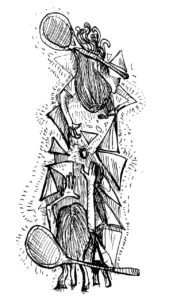
Escapes

Fiction by | June 3, 2024

Exactly seven in the morning at the Bankerohan-MacArthur-Magallanes intersection, I found myself wearing a mask of a prominent revolutionary. I stood there, but I wasn’t screaming like the other protesters. Despite the shouting, I could still hear commuters and pedestrians complain. I heard not the loudest cries of the protesters but the woes of the morning commuters.

“Quit that, you are just causing traffic,” one driver shouted.

“What are you doing, ‘day?” an old woman asked.

I looked at her, but I couldn’t speak. How could I explain that I was there because I was fighting for something? Because I was fighting for a cause. When I woke up that morning, I reminded myself to wear the mask hoping it would shield me from their cold reactions. The others were just quiet. Some were too preoccupied with their own concerns. Others just didn’t care.

At exactly 7:30, someone blew a whistle louder than I expected. If it was from one of us or from a policeman, I did not really know. We were told before the rally that if we heard a whistle, it was time for us to leave. It was a signal for all of us to drop everything—the banners, the placards, the masks. We threw them all away in every corner that we turned into. I started to walk fast then I remembered my friend telling me to throw my mask. I threw my mask under the footbridge that smelled like piss. I hurriedly took off my red shirt under a cart full of cabbage. I ran towards the alley that led me to the terminal where we rode the boat to cross the river. While waiting for the boat to fill, I stripped off my black shirt and put it inside my bag. When I looked up, the woman sitting next to me was staring. I was now wearing my course shirt, a reminder that I had a class to catch. I tossed my next shirt into a bin full of carrot peelings, leaving me in the shirt I had worn eight hours before the protest when we were still planning our propaganda stunts and escape routes.

When I arrived at the terminal in SIR, I walked toward the church where we had met for the protest. I knocked on one of the doors as if nothing happened. Nobody answered. Good, I said with a sigh of relief. At least I didn’t have to explain myself to anyone, not until I got my cup of coffee. I stayed there for about fifteen minutes waiting for some of my friends to arrive. But when it seemed as if  no one was coming, I decided to leave the church and take the first jeep to Mintal. It was almost 8:30 and I was late for my MST class.

I was about to cross the street to where the L300 van usually stops when suddenly somebody held my arm. When I turned to check who it was, I saw a man wearing a yellow polo shirt with a logo CTTMO. Before I could say a word, he said “asa ka ‘day?” I wanted to say I was trying to wait for an L300 van to Mintal but no words came out of my mouth. I simply said “Dira lang kuya. Ngano diay?”

“Ayaw’g tabok dira. Jaywalking na.”

Without saying a word, I walked away as fast as I could. Finally, I hailed a van and was on my way to school. I had never felt like this before. I didn’t know if it was fear or passion. Maybe it was just an adrenaline rush. It was my first time to join a rally, but it was the first time that I felt so scared. I didn’t know what could have happened if the police had caught me. I knew the rally was for a cause but I was also aware of the risks it came with. I was just glad that it was all over.

From that day on, I decided to not go to street mobilizations anymore.


But Charlie was different. We were together in several street mobilizations and not once did she wear a mask. Not even a handkerchief to cover her nose. Charlie was the person I have always wanted to be but feared to become. And what I am today, I think, was because of her.

A month ago, our organization went to the community school where Charlie was a senior high scholar. We visited to conduct a writing workshop for the Lumad students. I wanted to get away from the noise of the Kadayawan Festival in the city and I was hoping I could talk to Charlie about my thesis project. Her face lit up when she saw me walking towards her. She was standing by the door of the school clinic. I reached out my arms and gave her a tight hug. My schoolmates and her friends sat on her turf, the clinic, where she served as the most competent health officer in their community school.

“Now that I think about it, I was jealous of you when we were kids,” I confessed to her.

“What?” she asked in disbelief.

“I heard you tell your mom that you wanted to be a journalist so I pushed myself to join campus publications,” I said. She stared at me. And before she could let out a word, I said. “I started reading books because I saw you and aunt Magda looked fascinated with reading. And now I am taking up creative writing because of that.”


Charlie and her Nanay Magda would always go to bookstores.

When my Tatay was not around, Tita would go to Book Sale and buy books for cheap bargains. If I got lucky, my Tita would let me join her and Charlie at the National Book Store where stacks and shelves of books await them. Unlike Charlie, I was not a big fan of reading books. I came for the food that followed their hours of reading.

“Charl, aren’t we going to eat a foot-long burger yet?” Charlie would just continue reading synopses and skim through books as if she did not hear me.

Today, I can say that books were their escapes. Books made them temporarily forget about reality—that Charlie’s father was in prison, that Nanay Magda could not visit him in the City Jail, and that life will never be normal because of Uncle Tommy’s absence.


I had been with my father driving Nanay Magda to UCCP Haran before. It was always for a meeting but I never really paid attention. It was long before UCCP became a home for Lumad evacuees from different parts of Mindanao. Before, I did not understand why my Nanay Magda would come often to a church facility for meetings. I wondered if she was a church volunteer.

When I was about eight, I remember Tatay brought us over to a private resort in Samal. Nanay Magda and Tatay would let Charlie and me spend the day swimming and the night time catching fireflies. Nanay Magda, Tatay, and the rest of their friends would spend the whole day in a cottage by the breakwater.

One time, I asked Lola Mami what they were talking about. Lola Mami was our 56 year-old-grandmother. Tatay assigned her to look after us for the meantime. Lola Mami said “I don’t know, just continue playing.”

That night, Charlie and I peeked at the window of the cottage. We saw Manila papers and a chalkboard full of scribbles. I was about to read what was written on one of the chalkboards when I heard a familiar voice. “Nagunsa man mo dinha?” my Tatay asked. I don’t recall what I answered him, but I do remember struggling to catch my breath. We never talked about what happened. Tatay never asked me again about it, but I never dared to go near the cottage where they met. I was just too scared.

When I turned twelve, I started seeing Nanay Magda work in the same office my Nanay was working in. Nanay worked in the dental department, while Nanay Magda had one of the tables in the admin and finance office. Whenever I came with my mom at work, I would often see Nanay Magda sit at the edge of the table in the conference room. I wondered what they talked about. I asked Nanay about it several times, but she didn’t answer. It was as if she didn’t hear anything.

Once, I heard Nanay tell Tatay that Nanay Magda was trying to convince her to open a bank account. She said they plan to put twenty five million pesos worth of operational funds. The money was for UIHSFI, NLDF, Gabriela Party list, ALAMAPA, and MISFI that was then called MIPC.

I remember seeing Nanay Magda holding different sizes of letter envelopes except they came in browns and not the usual white. I only knew they were envelopes for money when I saw Tatay hand in those kinds of envelopes to Charlie last month. Charlie told me during one of our interviews that it was because of her mother that they gained favor of being enrolled in Daniel R. Aguinaldo National High school. She said that her mother had connections.

As our conversation continued, she told me about her experience sleeping in different hotels in Davao. And then, she told me about the car chase his mother was involved in together with different colleagues who are now working in the government as Makabayan bloc representatives.

Because of Nanay Magda’s active participation in mobilizing urban people in fighting for an egalitarian society, she could not afford being seen by policemen.

I often wondered how Charlie dealt with the fact that Uncle Tommy was in prison. In one of the conversations, I asked her “So okay lang sayo?”

Then Charlie answered, “Constant man among communication. It was like my father was never away.” That day she told me about how they were able to bring in a cellphone in jail. Nanay Magda’s jail guard friend kept it a secret.

For five years, Charlie went in and out of the prison to visit her Tatay. And this meant going naked before the jail guards for security purposes every time.

“How was it for you?” I asked Charlie during an interview on a Monday morning.

“It was alright, I’ve always been open and confident about my body,” she explained.

I couldn’t imagine myself going through it. Maybe Charlie was able to adjust. After all, she visited her dad at least twice a week. But it must have been awkward at the beginning.

For the last three and a half years of Uncle Tommy’s imprisonment, he was transferred to the provincial jail in Santo Tomas, Davao Del Norte. Their security was much looser and so we were able to bring in a cell phone, DVDs, and a packet of cigarettes. The environment was much better too. The space is way larger than what most prisoners needed for livelihood programs like carving wood and Sprite bottles and making Papier Mache to sell later.

When we visited, the prison air smelled like feces or some kind of putrid food, I remembered.  Charlie and I covered our mouths with our hands despite Lola Mami’s command to be civilized and mature.

Uncle Tommy managed to laugh and explain. “We’ll make glue paste out of those overripe bananas.”


“’Nya Kamusta naman mo sa imong boyfriend?” I asked Charlie.

“Lahi napud.”

“What?” I asked in surprise. “Why didn’t you tell me about it?”

“It’s not as if you know everything about me. Daw be, kanus-a man ko first dinatnan?” she said, sounding irritated.

I kept silent. I was surprised by how she asserted herself, reminding me of how Nanay Magda used to speak to their colleagues at work. It was as if she was always in an argument with someone.

Charlie broke the silence by changing the topic. When I didn’t respond to what she said, she blurted, “Do you really have to know everything about me?”

We used to share a lot of things together. We practically grew up together. I couldn’t remember when we stopped. It was only then that I realized that Charlie and I were not like before. Things were different. We grew apart.

“We used to visit Tatay in DAPECOL when we were twelve,” Charlie said. “Nanay asked us to bring over her special adobo, which my father liked. Days like that always ended with Lola Mami, Ate Beth, and me eating lunch together. When we got home that day, Nanay told me it was time that I learned to wash my own clothes. She showed me the stain on the pants I was wearing yesterday. I tried to recall where I sat, but I was sure I was careful,” Charlie continued.

I remember the day I got my period too. It was like Charlie and I lived the same lives. That day started and ended with a conversation with my Nanay.

“Sorry ‘nay. But I honestly don’t remember where I got the stain. I will wash it off myself ma.” I said, almost crying.

“It’s okay, ‘nak.”

Surprised at how tenderly my mom called me anak, I asked, “Ma, how do I wash the stain off my shorts?”

My mom gave a small laugh and said, “This is not just any stain anak. Dalaga ka na.”

To me, it was always my mom who knew everything about the world. She taught me everything from the ABCs to Mindanao being the place where the most successful of uprisings will take place. She is my first teacher.

“If ever the revolution starts, the Philippines won’t be ready for it. But Mindanao— it can surely stand on its own,” she told me once with confidence in her voice.

I didn’t understand her then. I felt the same way the day I got my period. When she told me that I just had my menstruation and that meant I was already “dalaga,” I didn’t understand what she was trying to say. But I had a strange feeling it would bring about changes that I might not be prepared for. I just wished then I could be as confident as my mom whenever she spoke of human rights and fight for what is right.

I apologized to Charlie for sounding too demanding. I didn’t want to push her to tell me everything but I quietly hoped that she would.  I remembered one summer day we spent in Lola’s ancestral house. I could never forget how Lola Mami laughed too hard when I asked her whose family was richer—mine or Charlie’s.

“Both Charlie’s family and your family are poor, honey,” she said.

I wondered if she was serious about it. Growing up, I always thought my family was financially more stable than that of Charlie’s. Our house was at the center of the city. They ate more vegetables than we did. Nanay would always tell me that we should finish pork or beef dishes served at the dining table, because meat was too expensive and not everyone could afford it. We had a nanny too. The helper in the house took care of almost all the household chores that I grew up knowing little about sweeping the floor.

I would often hear Charlie complain about how Nanay Magda would often ask her to sweep the floor, wash the dishes, and sometimes even take care of the small laundry. I never got the answer that I wanted. It’s only now that I understand that it was the answer that I needed.

Our families were both poor not just because Charlie’s mother and my father earned a little but because we never kept the money for ourselves. It was impossible for us to get rich. My father and mother earned more than we needed, but they would always give more than they could to help others.


Charlie’s Nanay Magda and my Tatay Romy are brothers and sisters, and the two had the same job. They both worked in a humanitarian organization that aims to resolve political and social conflicts, at least that was what I thought back then. But now, I am finally sure it was more than that. My father did not talk much about it. All he says is that they have served society much more than we had to.

When I told my Tatay I planned to join the movement to call for social equality, he asked me if I really had to. It was as if he was trying to talk me out of it. It was as if he was telling me that I didn’t have to do it, because he believed that what he and Nanay had done was more than enough.

That night, my father surprised me. He asked me to stop going to UCCP Haran where hundreds of Lumad evacuees were currently staying. He told me he didn’t like that I was very active in the movement. When I asked him why, he simply shrugged and said, “Just do as I say. Don’t get yourself into the Lumad issues.”

I told Charlie about what Tatay told me. She said she was not surprised at what Tatay wanted me to do. But she also told me that Nanay Magda told her differently.


Charlie and I had a similar childhood. We went to resorts, hotels, and rest houses and waited for our parents to finish their meetings and discussions. For Charlie and me, they were all fun and games. For our parents, they were risks that they had to take. Bringing us over was the only way they could work and still be with us at the same time.

Beth, Charlie’s older sister, used to go with us out of town. She is four years older than us, so by the time that our parents became busy with their meetings, she was already in high school. She was no longer interested in collecting shells or catching hermit crabs. She was more concerned with other things she considered more important. Once, Ate Beth told us, “It’s okay. Soon, you will grow up and understand what we are fighting for.” It left us wondering. Who was the enemy to begin with?

Charlie and I liked the attention of our parents’ co-workers. We are both extroverts. Nanay Magda was more involved in the organization and held a higher position than Tatay. Charlie was “much popular,” my young insecure self would definitely say. Our parents’ coworkers would call Charlie “Magda’s little guard” until today that Charlie is all grown up and her mother is no longer here with us.

Nanay Magda died on the 12th of June in 2012. It was Philippine Independence Day yet we were grieving. Charlie’s father had just been released from jail for a month when she passed away.

Charlie said that a few weeks before Nanay Magda’s death, it was Uncle Tommy who started coughing small lumps of blood and was already suffering from appendicitis. This was why Nanay Magda accompanied him to the hospital for a check-up. Charlie and Beth did not find the need to come with them for the check-up. A few days later, it was their Nanay Magda who needed to be hospitalized. I could not imagine my cousins’ clueless and stunned faces.

The doctors initially said she only had dengue. My family wanted to come by the time she received the diagnosis, but my Tatay said it was no longer necessary since Nanay Magda was about to be discharged in the next few days. “We assumed everything was alright because Nanay was already making vacation plans with me that time,” Charlie revealed during our interview.

“Let’s go to Manila, Charl. Just the two of us,” her Nanay said.

“What would we do there? We were just there two years ago,” Charlie wondered.

“Let us watch Phantom of the Opera. The show would surely be good,” Nanay Magda assured.

It was from Nanay Magda that Charlie inherited her love for literature. Almost every month, she would bring Charlie with her to bookshops, cinemas, and shows. She did not ask Charlie to read. It was Charlie who started picking up books, browsing, and saving money to buy them. It was Charlie who asked for every Percy Jackson book for her four consecutive birthdays.

The day before Nanay Magda was about to be released from the hospital, everyone was shaken up. The doctor’s findings for her death were not just believable. “Lupus with the signs of malaria and dengue,” Charlie heard from the doctor.

The whole clan was both grieving and apprehensive about her death.

Nights before her death, a couple of suspicious men lingered outside Nanay Magda’s hospital room. Tatay and the rest of the family just ignored this, because Nanay Magda was sharing the hospital room with two other patients.

Everyone strongly suspected foul play, but the clan still decided not to have her body autopsied. It was a unanimous decision and so her funeral followed shortly after.

“It was easier to accept that Nanay died because of natural causes,” Charlie told me one Sunday she went to our home to get her monthly allowance my father asked from the organization.

For two nights, the funeral was held in a funeral home an hour away from the city. By the third and last night, the family decided to transfer the casket to a semi-private church the movement owns in the city for more privacy, accessibility, and safety.

I was there by the third night. The church premises are huge. Aside from the main church building, there was a five-floor dorm and a function building. To my surprise, the hugeness of the premises was not even enough to hold about four to six hundred people who wanted to pay their respects to the dead. (I am not even exaggerating.)

Jeepney and trucks brought strangers from far-away places. They kept on coming to the point that the visitors had to stand by the highway since the whole church premises were already full of people. Most of them were not our relatives. They were supporters of “the far left.” I saw a number of different organization flags everywhere. But what I liked most was the flower arrangement on top of her casket. Bloody red roses dominate it, but it did not overpower the yellow dandelions forming a scythe and sickle.

On that same night, Charlie’s classmates paid a visit. About ten in the evening, Charlie decided to send her friends off by the church premise’s entrance. While waiting for a jeepney with her classmates, she noticed a short man with dark complexion across the highway. Charlie and her classmates needed to talk so much to keep up with each other that she did not have much time to be suspicious. A few moments later, Nanay Magda’s workmates were already chasing after that man.

“That was an ‘intel’, Charlie,” they said half an hour later when the man they chased had already gone. Uncaught. “We noticed him observing you from afar.”

A month and a week after Nanay Magda’s death, Lola Mami also died in her sleep.

It sucked out all the vigor and will in Charlie. Charlie started losing her interest in her studies. She was supposed to finish high school in a public school in Davao and was about to take the entrance exam for UP by 2012, but she started having boyfriends and relational problems with her classmates.  And her family’s financial and emotional instability just made it harder for her to continue. The monthly financial allowances given by the organizations were just not enough.

Beth had to stop her studies and work in a call center. Charlie, her sister and her father— they all were struggling to adjust. Every feeling seemed alien to them. The absence of their Nanay and the presence of their father in the house made the situation much odder.

During the last month of Nanay Magda’s life, everything was fine. In fact, their house finally felt like home. Nanay Magda cooked the recipes she learned from her mother like rellenong bangus, turon, and Christmas ham. She and Uncle Tommy sat on the sofa and watched TV until they fell asleep in their eight-by-eight-feet living room.

After that one perfect month, Nanay Magda’s absence left the largest void. It was a black hole that sucked everything from their family.

Charlie ended up not going to school for three years and I did not blame her for that. Now, I can say that she needed those years to grieve, reconstruct her memories of her mother, and help herself go back on track.


The K-12 program was institutionalized by 2016. So when Charlie decided to go back to school, she had to undergo the extra two years of senior high program.

In May 2016, our clan had a summer reunion in a private resort. We were called to form a circle and have a meeting. All of my cousins were there because Charlie, Malaya, and Mario’s education were the main agenda. All three of them decided to enroll in the community school where one of my cousins, Jay, taught.

I, my mother, Charlie, Mario, and Malaya rode our Toyota Innova to Compostela Valley by 5 a.m. on a Saturday morning.

Charlie expected the school to be on top of the mountains, so she brought all the sweaters that she owned. To her dismay, the school was in between valleys where the air circulation was not that good. But Charlie sure was an optimist. The school campus was better than expected, she said to me. She expected the rooms to be made of amakan, but they were made of concrete cement. The only issue we observed was the uncleanliness of the dormitory comfort rooms. They were not comforting at all. I waited for Charlie to express her dismay, but she did not.

I stayed with her for a few days. We hoped that she would then continue staying there. The following Wednesday morning, I went back to the community school to volunteer and check how she was. By the time I arrived, she, too, had just returned from Davao.

“We should have gone together!” I said.

“Yes, you could have helped me with this baggage.” She pointed to the rectangular plastic sack that contained her new clothes, a month-long supply of snacks, and a few handfuls of classic books she wanted to read for the whole semester.

I knew Charlie was determined to continue and thrive. Today, she is already in her last year in senior high school.


I wanted to come back to Com Val to talk to her again. There was no point in texting her because she did not have a phone, and their school lacked cellular signals. I planned to go without telling her. As I logged into my Facebook account, it beeped and notified me that she liked my latest post.

“Hey, where are you now? I was planning to go to Com Val tomorrow,” I immediately messaged her.

“LOL, I am in Davao now.”

Good thing she was online. I could have traveled miles and still not see her at their community school. I got to talk to her and ask if it had ever crossed her mind to leave the school.

“Yes, but just for a few days to cool down and then return again. In fact, the school is not doing well right now. Teachers were also in protest for their cash advance,” she said.

As we talked about her continuing her studies in that community school, she said “It was my way of finding myself again and reaching out to those who knew Nanay. Ate B and Kuya A visited the school for an event and they knew Nanay so well. They recognized me too!”

Seeing her excitement as she saw the people she and her mother were with made me happy and comforted too. I knew that Charlie was back on track. She did not die along with her Nanay.

She said she went to school to find herself again. As we spoke, I felt that she already had. Now, it seems like she is starting to shape another version of herself. She already knows who she is and what she wants to be. She recognizes whom to serve and whose interests she’s prepared to fight for.

While I am afraid of the rush, she welcomes it so well. “It is fun when you are with your friends, much more when you know what you are fighting for,” she said to me.

Afraid to say how hard it was for me to return to the streets, I diverted my attention by offering her a banana cue to eat before she leaves for Com Val again.


Rizia Jahziel V. Perez is a graduate of BA English (Creative Writing) from the University of the Philippines Mindanao. She has a five-year experience in public service and is currently a sophomore at Rizal Memorial College of Law.